

Charlie Answers Your Questions
Send in your questions on Instagram (@divineeprovidence) or leave a comment below!
Would you lend your image to companies to model products via AI if it meant passive income? —@aaron_frazer
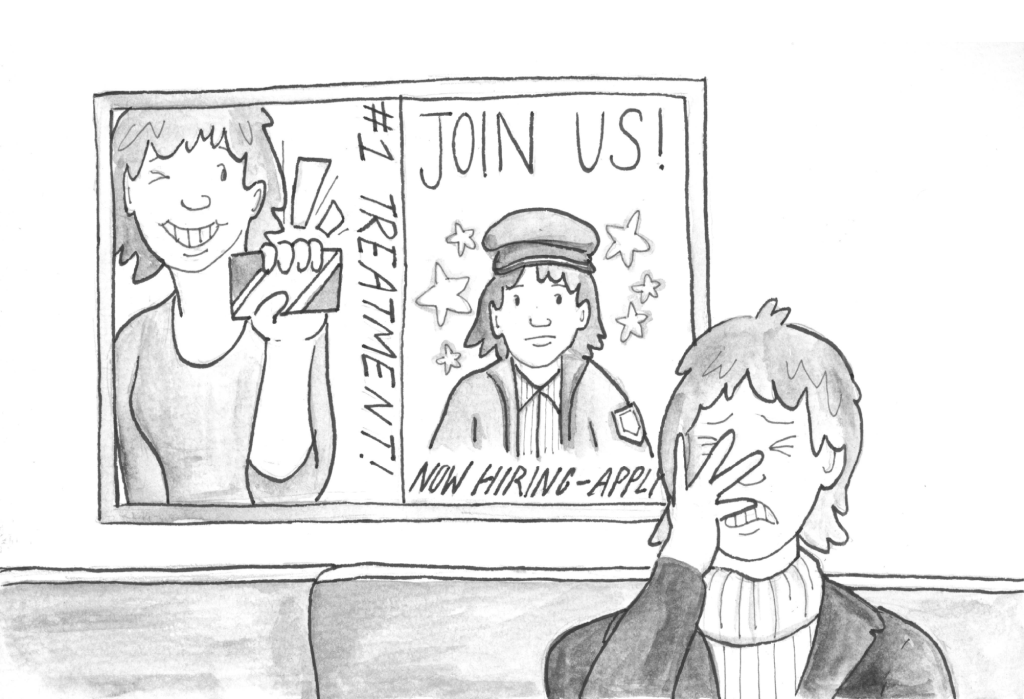
In most rooms, I am the AI polemicist. I am stubbornly against generative AI in a way that people often misconstrue as being against the future. We use “artificial intelligence” as a blanket term that has nearly lost its meaning, but in terms of generative image-making and LLMs, I see no benefit and infinite horrors. I am sympathetic to the idea of trying to eke out a little extra income in a world where a steady job has become a privilege, but I also see “getting the bag” used to launder jobs and industries that only exacerbate that problem. In both development and use, LLMs are degrading the quality of life of millions of people. They guzzle our natural resources. They promote and advance violence, particularly against women and children. They proliferate misinformation and disinformation. They are influenced by their developers, who are not without agenda. AI ethics aside, I would advise anyone against lending their image for use in perpetuity without restriction. This sort of agreement undervalues the worth of your image and sells you out for very little in return. I reject most sponsorship deals I receive because there are very few brands I’m interested in being involved with in general. Do you really want to get on the subway one morning and see yourself as the new face of Pfizer, Army recruitment, or the Church of Scientology?
What do I need to know to move to NYC? Always wanted to, never bit the bullet and did it. — @heisnothome
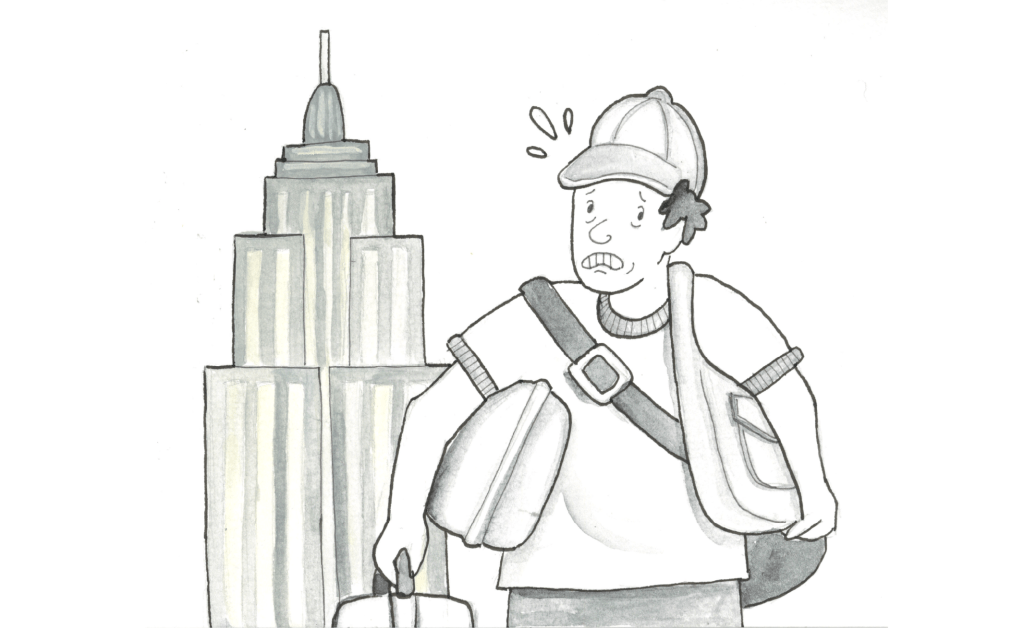
A lot of advice for moving to NYC is dependent on where you’re moving from. Adjusting to a population of 8.2 million people is much more difficult if you’re coming from a small town in the Midwest, rather than, say, Los Angeles. However, there are several unique aspects of the city that nearly every new resident will have to acclimate to.
- The density
You may have heard that New Yorkers are brusque. It’s true. The sheer volume of people that you interact with every day demands a sort of curtness that can be hard to understand initially. Particularly because most people walk and take public transit as their means of transportation, you will (probably) be around a higher density of strangers than ever before in your life. This means a couple of adjustments. You need to be more spatially and socially aware. Respect sidewalk etiquette, don’t hold up lines, walk at the same pace as the crowd, and stay vigilant if traveling alone at night. Sometimes the crowds can be draining. It’s rare to find a place where you can be alone, and even in your apartment, you can still hear the buzz of your neighbors through the walls. But density also means more opportunities, friends, dates, jobs, and experiences than ever before. I’ve watched several of my friends absolutely transform their lives by moving to NYC because the city they lived in previously was stunting their growth from a lack of community and resources. If you’re interested in reading more about what makes a large city like New York thrive, I recommend Jane Jacobs’ classic, The Death and Life of Great American Cities.
- Public transit
Winston Churchill once said “…Democracy is the worst form of Government except for all those other forms that have been tried from time to time”, and I think if you replace “democracy” with “the MTA” and “government” with “US public transport,” it accurately sums up most New Yorker’s opinion on the subway. The MTA is corrupt, the stations are crumbling, and sometimes there’s vomit in the empty car, but it’s by far the best public transit in America. I have taken the L train to school every morning for three years, and it has never once failed me. Not every line is so reliable, but as signals are updated, they’ve gotten much better.
If you come from an area where you’re used to having a car, it may be a difficult adjustment initially (1 hour to travel 5 miles??), but it is such a relief. You can stay out and drink as late as you want because you don’t have to worry about driving home. You can get anywhere in the city you need to go for a flat rate of $2.90 each way. You can read on your commute instead of staring dead-eyed at the road ahead. Once you know the lines, you don’t have to worry about knowing where you are because you can always find a route home.
Some of the stations are still a bit Byzantine even to people who have lived in the city for years. Fulton St. station is notoriously complicated, and now and then I almost go down the Brooklyn entrance when I mean to be on the side of the street with the Manhattan one. Just go easy on yourself for the first couple of months, keep your Google Maps pulled up, double-check the train you’re getting on before you cross the bridge to the wrong borough, and don’t be afraid to ask a stranger for help navigating.
- Geography
I hinted before that it can sometimes take an absurdly long time to travel mere miles, and that’s just one aspect of NYC’s unique geography. It’s not such a big area in square miles, but each borough is home to dozens of distinct neighborhoods that each have their own beauty. When you first move here, you won’t know which area is best suited to your needs. Although the city is extremely accessible, you will end up spending much more time in your own neighborhood than you probably imagine. Aside from finding a good apartment (which is a Herculean task on its own), it’s important to look for somewhere that is easily accessible by public transit and has adequate grocery stores nearby. When I first moved to the city, I lived in Flatbush, 50 minutes away from where I worked in Manhattan. I didn’t perceive this to be a big deal at the time since I was used to commuting, but I didn’t realize I would also be 50+ minutes away from my friends in other boroughs and most weekend activities I was interested in. If you’re a young person moving to NYC, the most popular affordable places to live right now are Bushwick, Ridgewood, Sunnyside, and Harlem. I recommend visiting the city before your move to get a feel for your neighborhood before you sign the lease.
What do you do with items that no longer serve your style/needs but hold sentimental value? — @futuretinyghost

I’m not a particularly sentimental person when it comes to clothing. One of the things that gives my closet the illusion of being enormous is my habit of constantly cycling through my wardrobe by selling my unworn/undesired clothes to buy new ones. However, I still have a handful of pieces that I hold onto for nostalgic reasons. Some notable examples include:
– An asymmetrical gingham Jil Sander top I was wearing when I went into labor with my oldest son
– A 1990s Samurai Shodown shirt that used to belong to my dad
– A set of 1800s tortoiseshell kanzashi that my hair has been too short to wear for the past ~5 years.
Anything that can be hung in the closet is stored in garment bags to prevent moth damage and keep them separate from the clothing I wear regularly. I organize my small accessories and jewelry into little dishes on my vanity (antique silver bowls, crystal ashtrays, etc.), and maybe it’s just my crow brain, but I still get enjoyment from looking at the pretty shiny things even if I’m no longer going to wear them. Shoes, hats, or miscellany can be placed in boxes (with sticky moth traps if necessary) and stored on a closet shelf. If you are willing to cut up a piece of clothing, I have one unorthodox suggestion: cut a swatch from the item and sew it into the lining of a beloved jacket or shirt. Particularly when holding onto clothing items from those who have passed, I find this is a sentimental and heartfelt way of keeping them in mind. You can even sew the patch close to your heart ❤.
Do you think New York is the best place to become immersed with fashion? —@buzzriceyear
In answering this, I have to begin with a *huge* disclaimer: I have never lived outside of the United States. That being said, I’ve lived in dozens of cities across the USA, from NYC to Denver to a one-stoplight town of ~5,000 people in Washington state. I think I’ve had a diverse enough experience to say if you want to get involved with capital F “fashion”, NYC is the best place in the USA to do that. I could point to everyday street fashion, which ranges from Park Avenue princess to Bushwick DJ, but truthfully, some opportunities will come your way in this city for no other reason than location. NYFW is becoming more of a dud with each passing year, but NYC is still home to some of the biggest magazines, photographers, and stores, let alone the thousands of up-and-coming designers and artists who are trying to break into the industry. A few months after I moved here in 2019, I walked in NYFW for the first time, and that was not due to anything extraordinary on my part– I was merely in the right place at the right time. There aren’t traditional thrift stores like Value Village or Salvation Army in the city, but the secondhand shopping is unreal. You have more competition than in a small town, but the affluent send their Margiela and Chanel to Buffalo Exchange as if they were bargain-bin rejects.
If you wear an even mildly interesting or eye-catching outfit in SoHo, you will get “street-styled” (have your photo taken by a street photographer). That simple connection/ exposure can open some surprising doors! Finally, there’s one of the biggest social benefits of the city: a (nearly) complete lack of judgment. In other cities and towns I’ve lived in, there’s been an unofficial uniform that most locals stick to, day in and day out. In Boulder, it was Patagonia tops, running shorts, and Chacos for most of the year. In Lubbock, it was a polo shirt and jeans. Deviating from this uniform in any major way meant side-eyed stares from passersby, or at the very least, the dreaded question of “why are you so dressed up?”. New Yorkers are immune to being shocked. I’ve seen Parsons students clanking around the west side in a full suit of medieval armor. If you catch any attention from being different here, it’s usually positive. Everyone else is too busy with their own lives to care that you’re wearing archival Comme.
I mentioned earlier that NYFW is losing its shine as major brands migrate, and based on that information, I would have to guess that an international city like Seoul, Tokyo, Paris, or even Copenhagen would be an even better option to become immersed in the industry. But for me, there’s not much more I could ask for from New York City.
 Backseat Driver
Leave a comment