
How can you be healthy enough to make a cosmetic medical decision when your entire ecosystem depends on self-disgust?
A few weeks ago, after spending too much time in front of the bathroom mirror, I decided it was time for Botox. I trawled through Google search results, threads from a subreddit called “NYC Bitches with Taste”, and various medspa sites looking for some kind of miracle treatment that would dissolve decades of insecurity with a single syringe. Instead, I found galleries upon galleries of before-and-after photos that seemed imperceptible from one another. Maybe, if you entered full screen and squinted, you would be able to tell some difference between the before and after, but I couldn’t differentiate them at all. Even worse, I found treatments for nearly-adorable-sounding things I didn’t even know I was supposed to be insecure about in the first place. Bunny lines. Witch’s chin. Violin hips. I closed my tabs and went to bed discomfited.
A few days later, while procrastinating on a final paper and sharing an oolong tea vape, my (much younger) classmates and I discussed birthday plans. In between puffs, one of them casually remarked, “When I turn 20, I’m getting preventative Botox here, here, and here”. The others nodded in agreement. While visiting Sephora to restock on overpriced concealer, I was horrified to notice a group of ecstatic 10-12-year-old girls oohing and ahhing over the Drunk Elephant skincare section. And then my daily commute on the L train was taken over by FaceTune ads cheerfully proclaiming “the best makeup is NO makeup!”. Blame it on Baader-Meinhof, but there were now literal signs telling me that not even an expensive Korean skincare regimen, a full makeup kit, and filler were enough now. The only way to be beautiful enough these days is to fully circumvent reality.

It makes sense. The internet logs who you are and presents a neat little dossier to millions of users. Before you go on a date, you scroll through your prospective partner’s Instagram, swipe through their carousels, and check their tagged photos. When you start to get to know a new coworker or meet a new acquaintance at a party, you can add their socials and suddenly access years’ worth of knowledge. And you may drift in and out of hundreds of people’s lives, but you’ll always follow each other. The version of you that exists in the screen is the one that they’ll associate with your name, the one they’ll claim to remember. So why wouldn’t you want every single photo to be perfect? Why wouldn’t you facetune away every hormonal cyst, every dark circle, every laugh line?
In May, the story broke that Facebook was allegedly serving thirteen- to seventeen-year-old girls with targeted beauty ads by tracking when they deleted selfies from the platform. A pitch deck Meta had crafted for advertisers also allegedly bragged about the company’s ability to utilize “moments of psychological vulnerability” by targeting terms like “worthless,” “insecure,” “stressed,” “defeated,” “anxious,” “stupid,” “useless,” and “like a failure”. Your emoji use, comment tone, word choice, and scrolling habits all influence your personalized ad experience, and Meta’s former Director of Global Public Policy has claimed that the company’s system flags any indication of low-self worth in order to drive vulnerable users towards weight loss, beauty, or other cosmetic products. It is no longer optional to have some form online presence, and that captive user base became the perfect test audience for emotional manipulation. Patients are expected to be healthy to receive aesthetic medical procedures (health, defined here by the WHO as: “a state of complete physical, mental, and social well-being and not merely the absence of disease or infirmity”), but when we are constantly under a state of attack from corporations seeking to nurture any buds of mental illness, it seems probable that a large amount of people are not in a fit state of mind to make these decisions, whether they realize it or not. As of 2019, 22% of adults and 40% of teenagers surveyed in the UK said advertising and images on social media caused them to worry about their body image.
This is not an indictment of anyone seeking cosmetic procedures; if anything, it should read as the opposite. Everything discussed above, along with decades and decades of rigid beauty standards, misogyny, and vulturous advertising, should make that decision entirely understandable. These days, it feels like you have to be nearly out of your mind to have a shred of confidence when the entire ecosystem depends on self-disgust.
The accessibility of cosmetic adjustments makes them feel as quotidian as picking out a new shade of lipstick. Personal neuroses about self-image aside, the health considerations surrounding aesthetic procedures have also been massively downplayed. Last Sunday’s episode of Last Week Tonight with John Oliver covered the safety concerns around improper Medspa regulation. Administered counterfeit or improperly used Botox, procedures administered without a medical professional present, and, in one case, engaged in medical malpractice so severe it led to three women being infected with HIV after receiving the as-seen-on-tiktok “vampire facial”. A key point highlighted in his video was the worrying minimization of aesthetic medical procedures, remarking that medspa visits have been “trivialized to the point that patients no longer see it as health care”.
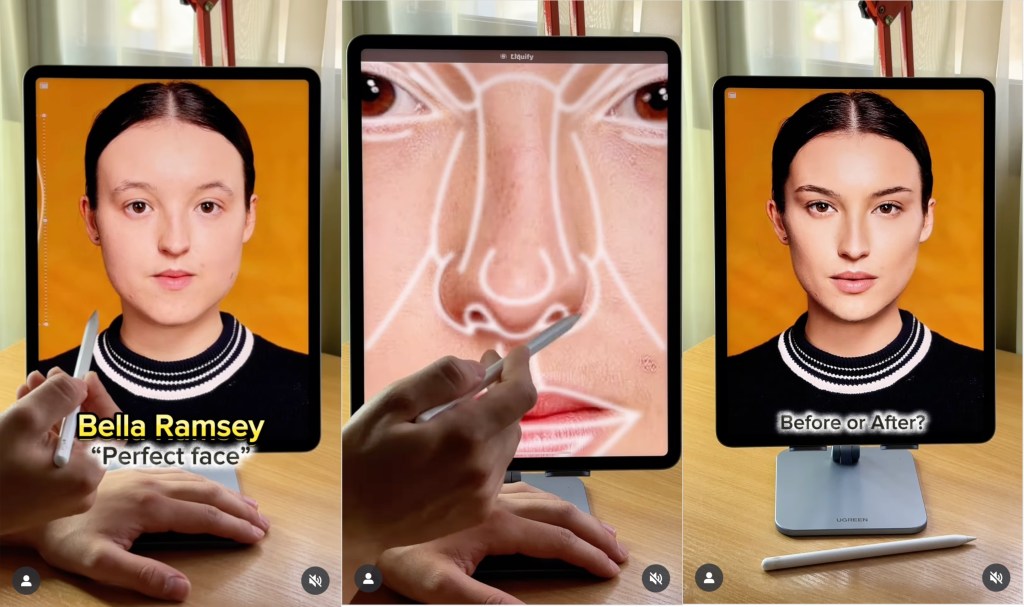
When you (ostensibly) have the option to turn into the “best possible version” of yourself, to plump your lips, erase your wrinkles, flatten your stomach, and realize the fantasy you always imagined, it feels like a form of negligence not to take advantage of it. Especially when it seems like everyone on your TikTok algorithm, Instagram feed, in your subway car, nail salon, and art history class seems to have gone through with it, you can feel ridiculous for not joining in. I’ve been offered multiple spon-con deals with medspas before, and I’ve turned them down for what seemed like obvious reasons. In particular, one of their cheerily written yet eerily hollow PR emails made my jaw drop. In exchange for a series of Instagram reels promoting the clinic’s “advanced aesthetic services”, I was offered four sessions of Emsculpt Neo, a trendy new form of bodysculpting that reduces fat on the stomach, legs, and butt. At the time of writing this post, and the time of receiving this offer, I weighed 105 lbs.
I’ve already spent the majority of my life dealing with crippling insecurity. In part, my desire to be an artist arose from a feeling that I had to somehow compensate for the lack of physical beauty I contributed to the world by creating beautiful things. I’ve lost so many experiences in my life because I was too afraid to leave my room and be witnessed by other people. There are countless parties, encounters, memories, friendships, and loves that I missed and will never get back. In a survey of 2,000 Americans, 57% of respondents left work early or skipped work due to a bad skin day, 50% have left or skipped a date, and 45% have left or skipped school or a party due to skin issues. Insecurity will rot and corrode your life until nothing is left, and these companies advertising to you are all too aware of that fact. The dream scenario for most tech companies is you, alone in your apartment, with nothing but their products to comfort you.
 Backseat Driver
Leave a comment